The Battle of Kursk Josh M. Conrad N.
Germany vs. The Soviet Union
In a four month conflict on the eastern front, from March to July 1943, the pivotal battle for eastern power in the war was fought.
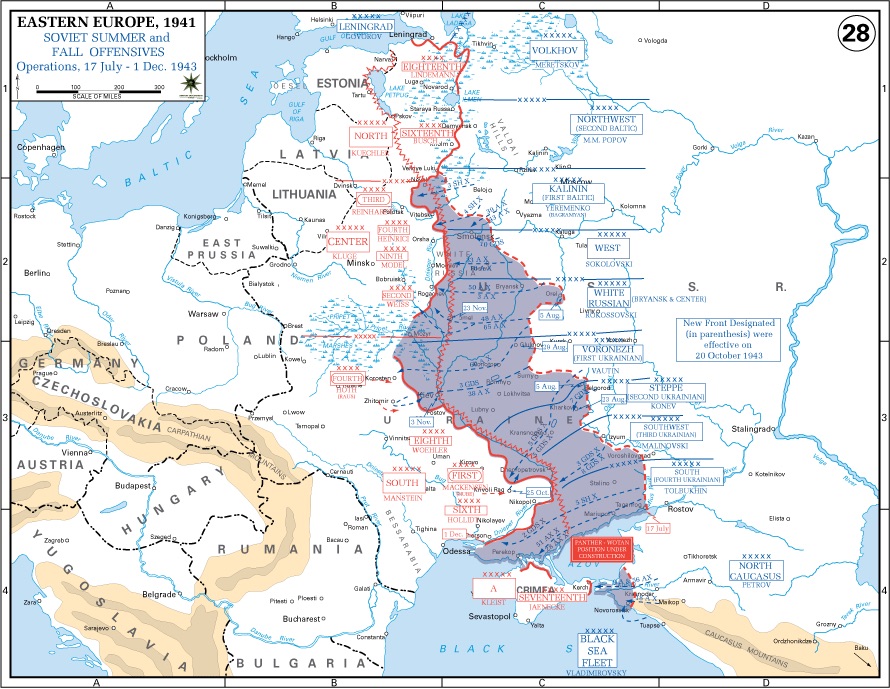
German numbers: 780,900 men; 2,966 tanks (including the 2nd SS panzer division); 9,966 guns and mortars
Russian numbers: 1,910,000 men; 5,128 tanks; 25,013 guns and mortars

Erich Von Manstein (German commander)
A German Field Marshal for the Wehrmacht. Born into aristocratic Prussian family with a long line of military service, he joined the army at a young age and served on several fronts during the First World War. In September 1939, during the invasion of Poland, he served on chief of staff. In May 1940, Hitler chose Manstien for the invasion of France.
George Zhukov (Russain commander)
A career officer for the red army, Zhukov played a very pivotal role in the drive eastward and ultimately conquer Berlin. Among the generals of the red army, Zhukov was placed at the top due to the sheer number of victories. Many world leaders recognized Zhukov's contributions to victories in ww2. He improved the whole worlds military leader.
The Battle: After the victory for the Reds and Stalingrad, the German army wanted to make what they call a 'swift backhand' at the Russians. Doing this, they launched an offensive and the red controlled territory. The Soviets held their positions of the Germans, resulting in a conflict lasting 4 months. With the amount of tanks each side had, this made it one of the largest tank battles ever in history. Eventulally the Germans had to pull back, due to American forces invading and taking over Italy. This however, allowed the Russians to launch a counter-offensive led by George Zukov. This turned the tide of the eastern state front, and allowed Russian forced to regain lost territory, caches, and inevitably let them reach Berlin.
Summary:
-Germans launch offensive
-Russians hold off
-Battle lasts till July and Germans pull off
-Soviets launch a counter offensive that sweapt all the way to Berlin.