Pitch & Volume what do pitch and volume mean when talking about sound waves?
Objectives
Define the pitch and volume of a sound.
Relate the pitch of sound to the frequency of sound waves & amplitude to intensity.
Define infrasound and ultrasound.
High or Low Pitch?
An orchestra is a group of musicians who play music together. Have you ever noticed the different instruments that play in an orchestra? Clearly, some sounds are higher or lower than others.
Sound travels in waves.
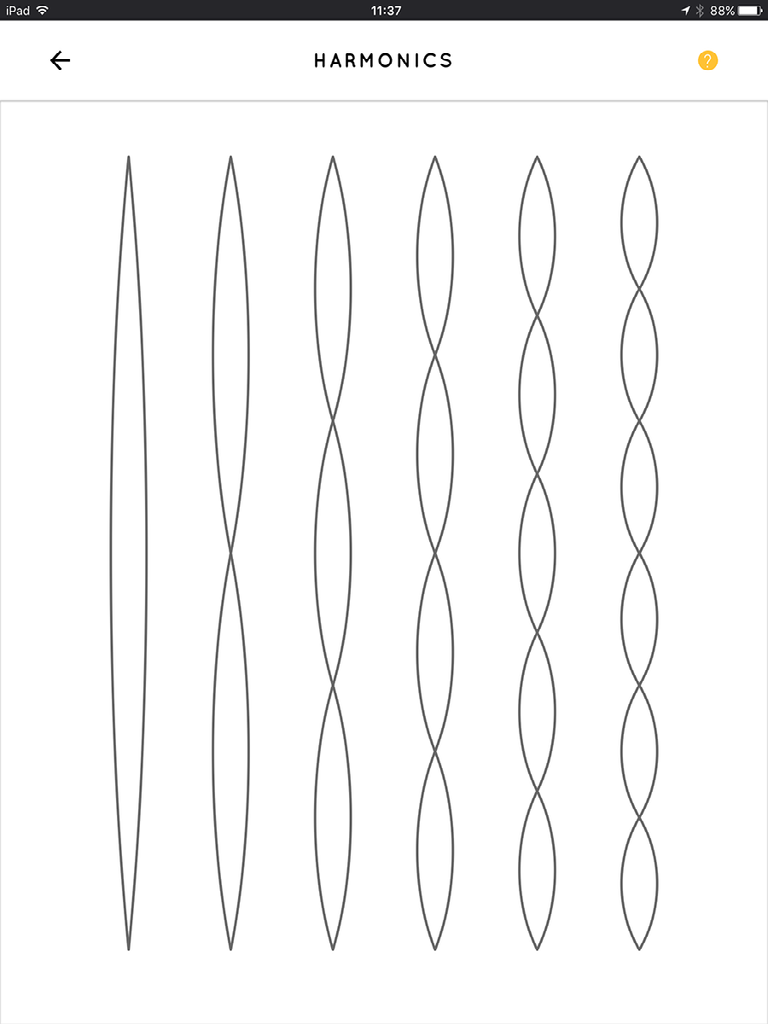
Sound travels in waves. The vibrations from the instruments reach your ear. You hear them as sound. Some sounds are high. Pitch is how low or high a sound is. An object or instrument that vibrates very slowly makes a sound with a low pitch. One that vibrates very quickly makes a sound with a high pitch.
Pitch is how high or low a sound is.
For example, the tiny piccolos trill their bird-like high notes, and the big tubas rumble out their booming bass notes.

Pitch, in turn, depends on the frequency of sound waves. Wave frequency is the number of waves that pass a fixed point in a given amount of time.

Can you Hear it?
The frequency of sound waves is measured in hertz (Hz), or the number of waves that pass a fixed point in a second. Human beings can normally hear sounds with a frequency between about 20 Hz and 20,000 Hz.
Sounds with frequencies below 20 hertz are called infrasound. Infrasound is too low-pitched for humans to hear. Sounds with frequencies above 20,000 hertz are called ultrasound. Ultrasound is too high-pitched for humans to hear.

Some other animals can hear sounds in the ultrasound range. For example, dogs can hear sounds with frequencies as high as 50,000 Hz. You may have seen special whistles that dogs—but not people—can hear. The whistles produce sounds with frequencies too high for the human ear to detect.

Other animals can hear even higher-frequency sounds. Bats, like the one pictured in the Figure below, can hear sounds with frequencies higher than 100,000 Hz!
Q: Bats use ultrasound to navigate in the dark. Can you explain how?
A: Bats send out ultrasound waves, which reflect back from objects ahead of them. They sense the reflected sound waves and use the information to detect objects they can’t see in the dark. This is how they avoid flying into walls and trees and also how they find flying insects to eat.
Loud or Soft?

Leaves rustle in a gentle breeze. A jet engine roars as the jet taxis down a runway. Some sounds are soft and others are loud.
The amount of energy in a sound, called its intensity, determines how loud it is.
Sounds with more intensity cause larger vibrations, which we hear as louder sounds. Tap a drum lightly. Your tap makes a small vibration and a soft sound. Now hit the drum hard. It vibrates more and makes a louder sound.

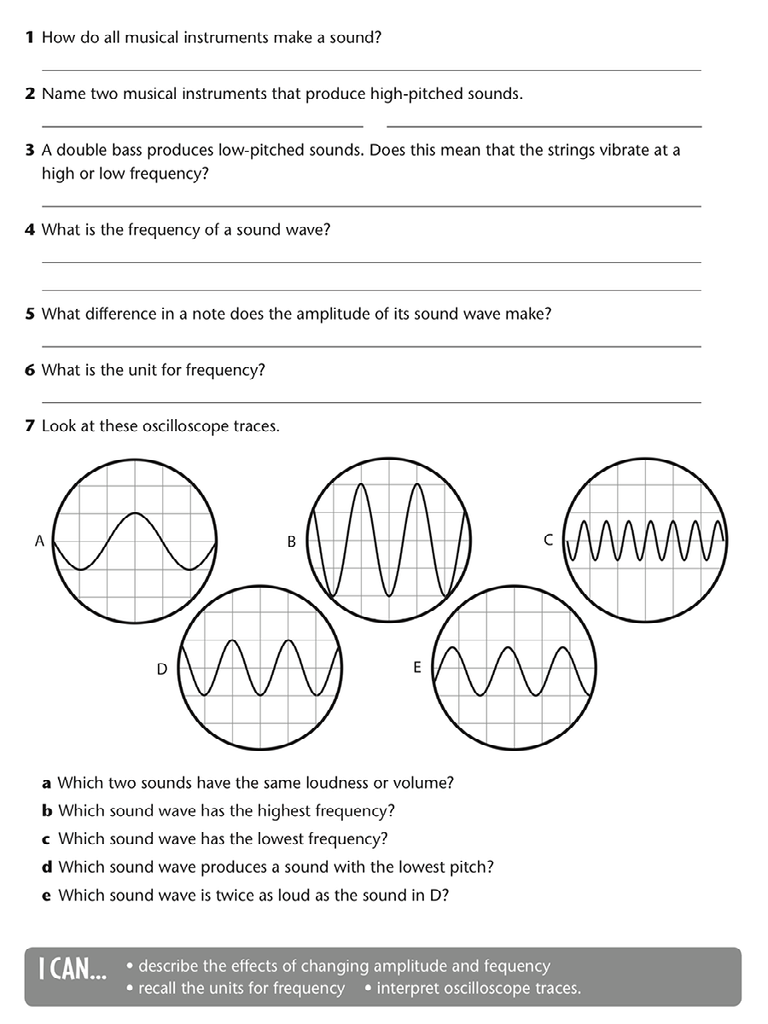
The amount of energy in a sound wave is measured as its height or amplitude. Loud sounds have greater amplitude than soft sounds.
Look at the Figure below. Notice, the differences in the amplitudes of quieter and louder sounds.

Volume and pitch work together to make sounds. Next time you hear an instrument play, listen to the radio or even just listen to someone’s voice as they talk or sing, see if you can hear the difference between the volume and the pitch.

Visualising Sounds

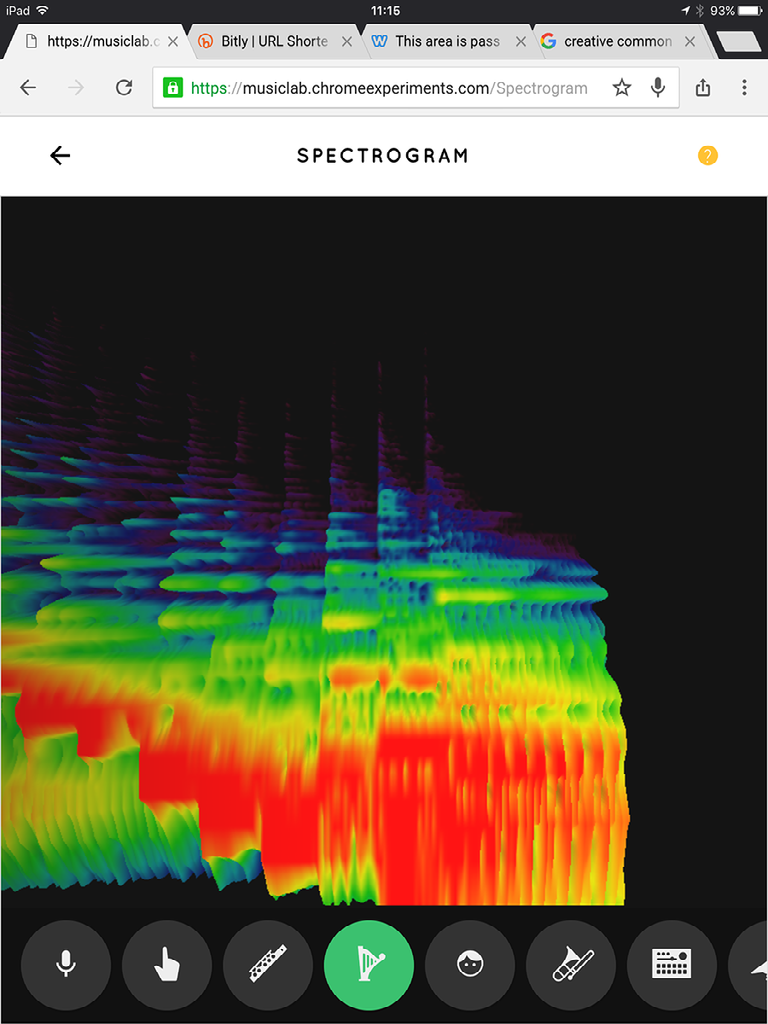
What does sound wave look like? How can you describe the parts of a wave?

Sound moves as a longitudinal wave, but sometimes we draw it as a transverse wave to discuss amplitude & frequency.
Summary
- How high or low a sound seems to a listener is its pitch. Pitch, in turn, depends on the frequency of sound waves.
- The frequency of sound waves is measured in hertz (Hz), or the number of waves that pass a fixed point in a second.
- Infrasound has wave frequencies too low for humans to hear. Ultrasound has wave frequencies too high for humans to hear.

Review