Ireland's Magdalene Laundries catholic unaccountability and exception in the Twentieth century
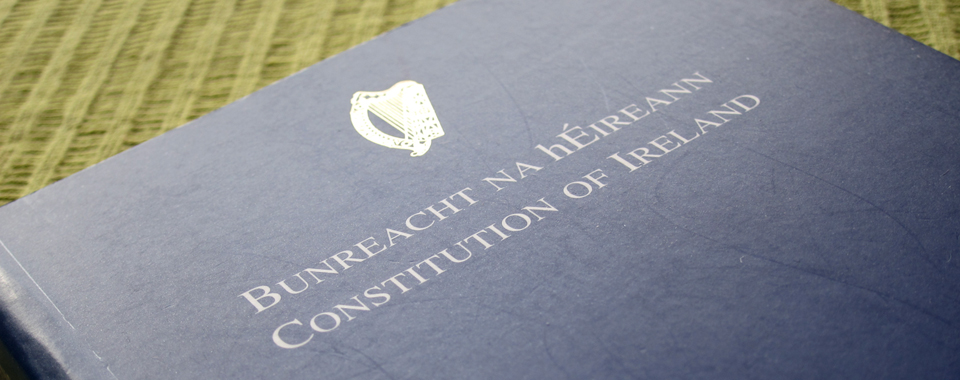
Irish Constitution - Establishment of 'Catholic Ireland'
- Around 30,000 Women and Girls imprisoned from 1767 - 1996
- Around 10,000 from 1922 onwards. Establishment of Independent Ireland
- Desire to establish an independent, 'Catholic Nation'
- Special emphasis on ideas of moral/sexual purity, women in particular
- Led to Catholic dominance over legislation on sexual practice
- Suppression of ideas of sexual immorality i.e. Carrigan Report (1931), continuation of the Magdalene Asylums
- Catholic dominance over Irish government and state

Establishment of Catholic support base through schooling
- Catholic Church enjoy majority control over huge number of schools
- Particularly dominant in primary education
- Desire for the education of the next generation of the priesthood
- Catholic teachings on sexuality taught from beginning of educational life
- Catholic clergy assume dominant position in administration of schools, dominant position in matters of educational policy
- Catholic dominance over majority of Irish society

'Magdalenes' at work
- No legal reasoning for detention. A breach of Catholic moral codes regarding sexuality - labelled as 'Fallen Women'.
- Catholic dominance and unaccountability allow for neither state nor society to question its actions
- Not simply imprisonment, but enslavement with forced labour. Major exception both within Ireland, and within the Western World. Complete breach of legal and societal norms

Physical, Sexual, Psychological Abuse
- Clearest breach to legal and social norms. 'Free' members of Irish society subjected to abuse from unaccountable 'sovereign power' of the Catholic Church
- Witnesses recall physical beatings - “two ladies were standing there, not nuns but dressed in navy. I was left with those two”; and after being made to remove her clothing and stand on a stool, she described being “punched by one of them, one side to another. I was dizzy, I kept saying I’m dizzy”. Others recall sticks being used.
- Hair cuttings more commonplace occurances - “t’was the ultimate humiliation for you. It changed me as a person to authority, God forgive me I learned to hate people then”. Also utilised as punitive measure
- Rare occurrences of sexual assault - 'she was subjected to sexual abuse by an auxiliary during her time in a Magdalen Laundry. She was not aware of this happening to anyone else'. Many inmates already sexual abuse victims
- Widespread psychological abuse, daily occurrences of verbal abuse from authority figures. Isolation the most common form of psychological attack - “The punishments for trying to escape included being separated from other women, left in isolation (a separate room) for two or three days after the attempted escape and fed their meals in isolation. They were escorted to and from the toilet and then back to isolation. One woman has told us that she was isolated from everyone else for three days and never again saw the girl who she tried to escape with”

Inmates pressured into laundries by family members
- Dominance of Catholic teachings over sexual morality override ideas of strong family units
- Women forced into institutions due to overt breaches in Catholic sexual morality i.e. pregnancy out of wedlock
- Some detainees forced into laundries simply due to suspicion, no breach in state legislation nor Catholic teachings
- Families seek out referrals from local priests in order to legitimise decisions over Magdalene laundry - 'A woman aged in her mid-twenties is recorded as having been referred by her parents to a Magdalen Laundry in the 1940s. The Register notes that she had had a child outside marriage. Although it was her parents who brought her to the Laundry, the Register notes that a named priest “insisted on her coming here"'
- Societal complicity with the Church over subjecting women to violence in the laundry

'Self-referrals' turned consecrates
- Many women and girls enter into the laundry system as a means of refuge - from poverty, homelessness, disputes .etc. Still innocent of any supposed infraction
- Many choose to remain for life, take religious and become active members of a religious order managing Magdalene institution(s) - evidenced by graveyards - 'The burial ground had been in use from 1889 to 1976 and was the location for burial of consecrates from High Park (that is, women who, having entered a Magdalen Laundry, decided to remain there for life)'.
- Switch from victim of Catholic dominance and violence, to a member of the same dominant and violent orders

Routes of entry via the state's criminal justice system
- Criminal justice system becomes a key supplier of labour to the laundry system, judges bow to Catholic pressure to use laundries as means of imprisoning criminals - 'in lieu of imposing a sentence of imprisonment', convicts became Magdalene inmates
- Abdication of role of the state in judiciary matters. No punitive measures by legal means. Complicity in maintaining a supply of workers for non-state/religious institutions.
- Garda play active role in maintaining the Catholic authorities' workers. Despite the fact the inmates are under the control of non-state organisations, they are still tasked with keeping supposedly 'free' women contained within the spaces of violence of the laundries

Failure of the state in inspecting laundries
- State inspectors fail to perceive any infractions against the health and wellbeing of the inmates confined to the laundries.
- Of greater concern is the condition of the building the laundry is situated within - 'The general focus of inspections carried would have been on
- a. Machinery Safety – Boilers, vents, etc.
- b. Welfare – cleanliness, light, toilet facilities, canteen, etc.
- c. Health – dangers like fumes, chemicals, occupational illnesses, etc'.

Support of state laundry contracts
- Lucrative state laundry contracts awarded to supply government departments with laundry services.
- Magdalene laundries transform into more commercial-like laundries, monetary reward to be gained and profit to be made to help sustain the institutions
- State contracts awarded to Magdalene laundries result in many departments having their laundry service completed by 'slave labourers'.

Decline of Catholic authority and calls for accountability
- Rise of feminist movements in Ireland cause a gradual wearing down of Church authority from the 1970's onwards. National identity is re-imagined, particularly after the emergence of details of the Magdalene system in news reports and various forms of media
- Catholic authority badly damaged in 21st Century following details of not only the Magdalene laundries but also of the damaging details of Child sexual abuse by clergy members
- Accountability in the Magdalene laundries is starting to be revealed after 2013 report - http://www.justice.ie/en/JELR/Pages/MagdalenRpt2013 - and subsequent government apology
