Wilsons Disease By: Gracie Huels
An inherited disorder that causes too much copper to accumulate in the organs.
Symptoms/ swelling, fatigue, abdominal pain, and uncontrolled or poorly coordinated movements.
There may be no symptoms. People who experience: Pain areas: in the abdomen; Muscular: abnormality walking or problems with coordination; Skin: web of swollen blood vessels in the skin or yellow skin and eyes. Also common: dark ring in the iris, fatigue, swelling, or tremor
Wilson's disease is the build up of to much copper affecting your body, usually to your liver, brain, and kidneys.

Wilson's disease is inherited as an autosomal recessive trait, which means that to develop the disease you must inherit two copies of the defective gene, one from each parent. If you receive only one abnormal gene, you're considered a carrier and can pass the gene to your children. Wilson disease is considered a mutation.
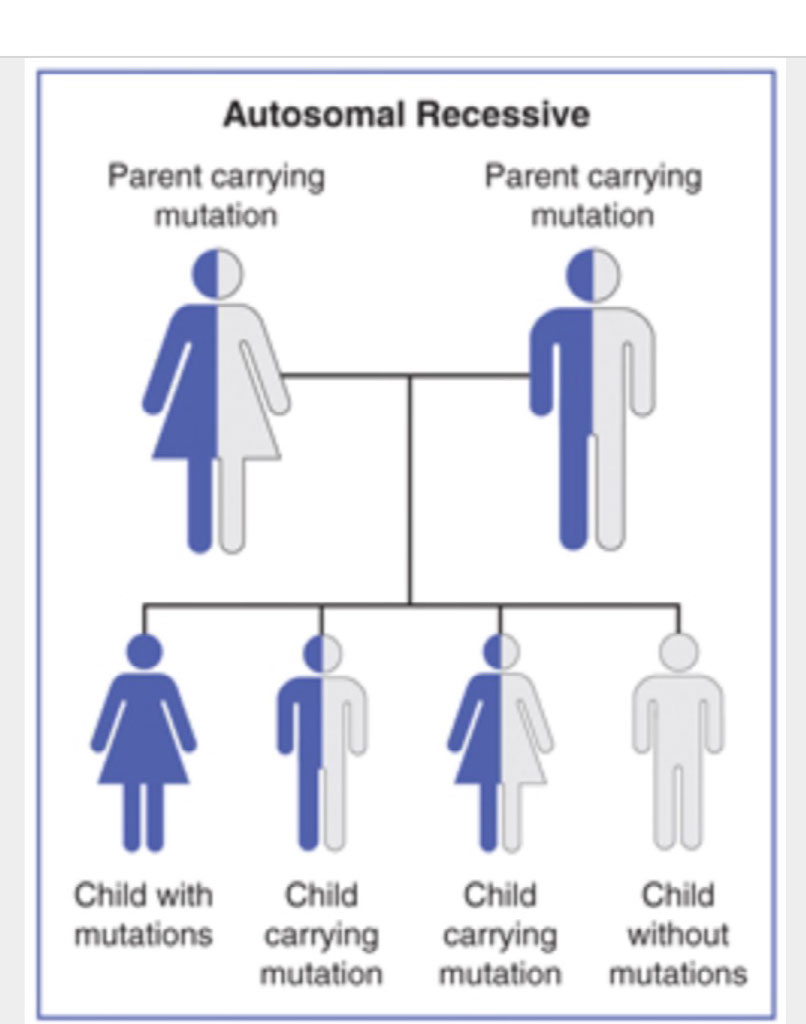
Wilson Disease is sex-linked, inherited from the offspring's parent. Wilson Disease is an autosomal recessive disorder.
Of the 23 different human chromosomes, the gene responsible for Wilson disease is located on chromosome 13,
Treatments: Removing the excess copper from the body, Reducing intake of foods that are rich in copper, Treating any liver or central nervous system damage.
Doctors currently use two drugs to treat Wilson disease: D-penicillamine (Cuprimine) and trientine (Syprine). These drugs help remove copper from organs and release it into the bloodstream. Once the copper enters the bloodstream, it is filtered out by the kidneys.

The diagnosis of Wilson disease is made by simple tests. The tests can diagnose the disease in both symptomatic patients and people who show no signs of the disease.
These tests can include: Opthalmalogic slit lamp examination for Kayser-Fleischer rings, Serum ceruloplasmin test, 24-hour urine copper test, Liver biopsy for histology and histochemistry and copper quantification, Genetic testing, haplotype analysis for siblings and mutation analysis.
It is important to diagnose Wilson disease as early as possible, since severe liver damage can occur before there are any signs of the disease. Individuals with Wilson disease may appear to be in excellent health, but are not.
Wilson disease is caused by mutations in the ATP7B gene. This gene provides instructions for making a protein called copper-transporting ATPase 2, which plays a role in the transport of copper from the liver to other parts of the body.
About one in 30,000 people have Wilsons Disease. Wilson Disease is more common in China and Japan.

Sources: http://qjmed.oxfordjournals.org/content/96/9/623. https://www.nlm.nih.gov/medlineplus/ency/article/000785.htm. http://www.niddk.nih.gov/health-information/health-topics/digestive-diseases/wilson-disease/Pages/facts.aspx