Working Part-time while Studying. By Joshua Gittoes, Michelle Royal & Joshua Wilson
An Introduction
There is an ever-growing call and necessity for university students to engage in part-time work whilst completing a full-time tertiary degree.

Part-time jobs present students with a multitude of positive opportunities such as:
- The pursuit for learning extra skills
- Making important networking connections
- Just earning supplemental income to self indulge
The continuous juggle of work and study is beginning to become a core feature of being a university student in today’s society.

Although countless studies have been conducted to analyse the effect that engaging in part-time work while studying has on the student’s academic performance, researchers have neglected to investigate what the overall impact this has on other areas of a student’s life. Our team’s hypothesis predicted that this balancing act would have a negative impact on the student’s overall performance at university and negatively impact their ability to successfully maintain a work-life balance.
Our Presentation
Our presentation will provide details into the findings of our research report, outline how we conducted, collated and analysed our research
Our Methodology and Results
The methodology for our report was conducted during the:
14th of April 2016 and the 3rd of May 2016
The location of the sample was decided upon as the social media platform, Facebook to achieve a broader range of response outside of local areas.

- Due to the ability for increased accessibility to the questionnaire and therefore could be shared on facebook easily, causing less friction between gaining exposure of the questionnaire.
And we aimed at targeting university students who work part time from the ages of 17 to 55+.
Because we chose to conduct our questionnaire solely online, we needed to use the POWER OF TECHNOLOGY so that a method of distributing an online questionnaire could be selected.

The selected format for creating the online questionnaire was Google Forms. This format was selected as Google forms is not only easily sharable but it also compiles the received data into graphs allowing for easy statistical data analysis.

Our aimed to structure our questions based on quantitative information. This decision data to be efficiently converted into graphs as quantitative data is generally much easier to graph than qualitative data
Other considerations that made us focus on quantitative information:
- This decision also allowed an increased chance of people willing to answer the questionnaire as the questions did not require too much effort to complete.
- This therefore leading to reliable responses as participants can sometimes avoid open-ended questions and quality of responses can therefore vary.
'Consistency'
We as a team believed that this focused approach on towards consistency inmethodology lead to strong academic practise and would therefore increase the overall quality of our report
Our Results

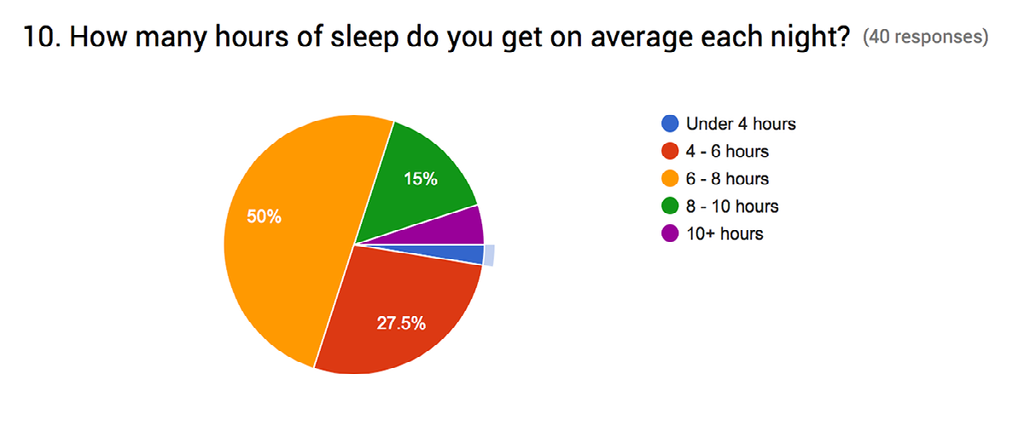

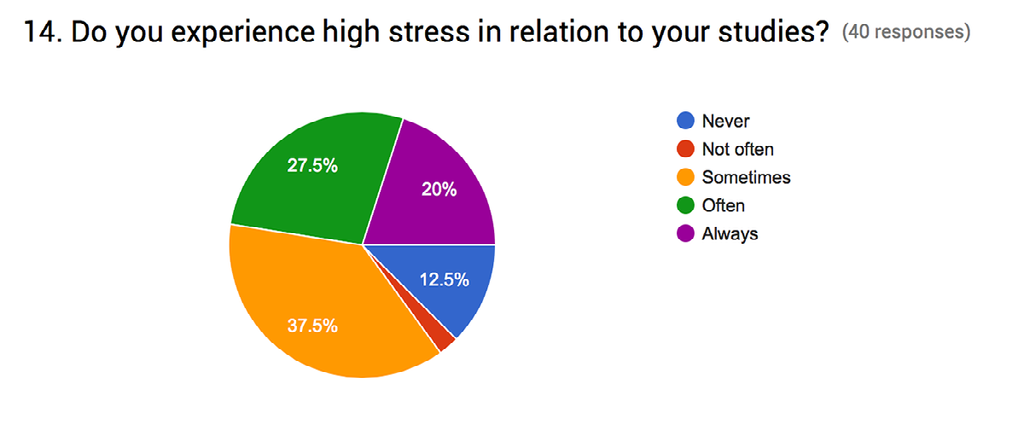
Individual Work
Josh Wilson: Source - Flexibility, compromise and opportunity: Students' perceptions of balancing part-time work with a full-time business degree.
- Financial necessity is a primary driver of part time work
- Reveals a complex set of supplementary reasons, that either satisfies a long-term vision, or a more immediate need for development or self-gratification.
- Most students compromise the longer-term benefit of study against the more immediate financial gains offered by work, resulting in an accepted lowering of academic performance as a consequence.
- The majority of the students did not see a connecting opportunity between their part-time work and future career.
Identify how it supported hypothesis: It shows that students saw the financial benefit as a requirement and accepted that a part time job will negatively affect their academic life. It also reveals that majority of students undergoing a part time saw no connection between their current work and their future career.
Michelle Royal: Source - The Prevalence of Sleep Disorders in College Students: Impact on Academic Performance.
- How sleep can lead to a sense of feeling overwhelmed and overloaded when completing assessment tasks.
- In a study conducted by the Journal of American College Health (Gaultney, 2010) students that were struggling with sleep issues and experiencing lower levels of sleep were at risk of poor academic performance.
- This information could be applied to the data found, suggesting that students not getting enough sleep could see reductions in their academic performance and even increased cases of absenteeism.
Identify how it supported hypothesis: It shows that working part-time whilst studying has a significant impact on the student's lifestyle and is a major negative contributing factor that is affecting their well-being. Students receiving less sleep are more likely to do poorly in both work and study environments, leading to the possibilities of poor academic performance and getting fired.
Joshua Gittoes: Source - Working While Studying at University: The Relationship Between Work Benefits and Demands and Engagement and Well-being.
- Highlight the motives as to why students are acquiring part-time work.
- There is a call for increased support for university students that are required to work whilst studying, not just financially but also the setting up programs that will provide them with the necessary aid they need to complete their course.
- Recent studies indicate that the major reason for a full time student to pick up a part-time job is generally due to the “increased costs associated with tertiary study and the reduced financial support from governments."
Identify how it supported hypothesis: Supports hypothesis as students few part time work not for positive reasons mentioned earlier in the presentation such as: The pursuit for learning extra skills, making important networking connections or just earning supplemental income to self indulge. This can have a negative impact on their lifestyle and well-being.
Reflection
While a part time job may have a negative effect on higher education it is deemed necessary by the majority of students. However due to a part time job only having a negative impact on academic studies but could potentially stopping the students from achieving acceptable results and passing their overall course, however many students still opted to undergo work while simultaneously studying. This can effect their overall lifestyle, impacting essential areas such as sleep, exercise and social life - and has the potential to impact the mental and physical health of students.
Conclusion
To conclude and summarise the presentation:
The presentation shows how the research conducted reveals that a part time or full time job while studying has a negative effect on social life with majority of students saying that they feel they miss out on aspects such as sleep, exercise, social life and studies. This can have an overall negative impact on the student's mental and physical health which can cause many issues in their lives.
A limitation of our study includes: an inability to ask follow up questions that would have provided valuable additional information and greater insight to the general trends in this study and as to why these trends were was occurring. An example within this research study was the inability to determine whether or not the sleep data in Figure 2 was restful sleep or not as categories for answering were too broad. The difference between getting 8 hours and 6 hours’ sleep can often be the difference between a restful, revitalising sleep and not receiving enough sleep. These questions needed to be re-constructed so that they could provide more accurate data.
We as a team believe that work and tertiary academic study has a negative effect on social life which is confirmed by the results. Students have to sacrifice aspects of their social life to accommodate for the added taxation of time that part time and full time work requires.
Future areas of research should be how undergoing a part time or full time job while studying at a tertiary level can affect mental health. This could include further education towards managing and promoting work-study-life balance and time management skills as it seems to be the case that an inability to completely commit to tertiary studies has the potential reduce effectiveness in not only student academic endeavour but also in other life commitments.
References
Creed, P., French, J. And Hood, M. (2015). Working while studying at university: The relationship between work benefits and demands and engagement and well-being. Journal of Vocational Behavior, 86, pp.48-57.Creed, P., French, J. and Hood, M. (2015). Working while studying at
Evans, C., Gbadamosi, G. And Richardson, M. (2014). Flexibility, compromise and opportunity: Students’ perceptions of balancing part-time work with full time business degree. The International Journal of Management Education, 12(2), pp.80-90
Gaultney, J. (2010). The Prevalence of Sleep Disorders in College Students: Impact on Academic Performance. Journal of American College Health, [online] 59(2), pp.91-97. Available at: http://www.tandfonline.com/doi/abs/10.1080/07448481.2010.483708 [Accessed 14 May 2016].