
Politics
Jim Crow laws specifically targeted African Americans and made it harder for them to be successful, active citizens in the United States.


Economics
During the Jim Crow Era, African Americans had an extremely hard time finding employers that would hire people of their race, and in the jobs they could obtain they were often exploited. This left African Americans desperate for places where they could achieve economic sustainability.
This picture describes how some companies needing workers would only hire people who were white. Most people were looking for jobs during the Great Depression, but a lot of times blacks were excluded from certain professions. This helped to oppress them further by keeping them at the bottom of the economic ladder.
This primary source is a handbill used to attract black settlers to Kansas. Kansas was the home state of John Brown, a famous abolitionist, and was known for being more of a "free state." This lead black people to see Kansas as a safe place for them to live. They also saw Kansas as a place where they could get better jobs and earn enough money to sustain themselves and their family. This handbill appealed to those positive views of the state by advertising that a migration to Kansas promised a better life; a life that could provide black people with economic sustainability and mobility.
This photo shows two tenant farmers hoeing a field in Alabama. Sharecroppers and tenant farmers were similar professions because they both included living on and working a plot of land on someone else's property. The plot of land was rented to the farmers, and they would pay the landowners, who were mostly white, with a share of their crop. This was not a well paying profession, and it was a job mostly filled by African Americans. Because of the poor pay, and the fact that sharecroppers and tenant farmers were frequently exploited, it is know as slavery by another name.
Social/Cultural
In all areas of pop culture African American stereotypes were present, further perpetuating the myth that blacks were inferior to whites.


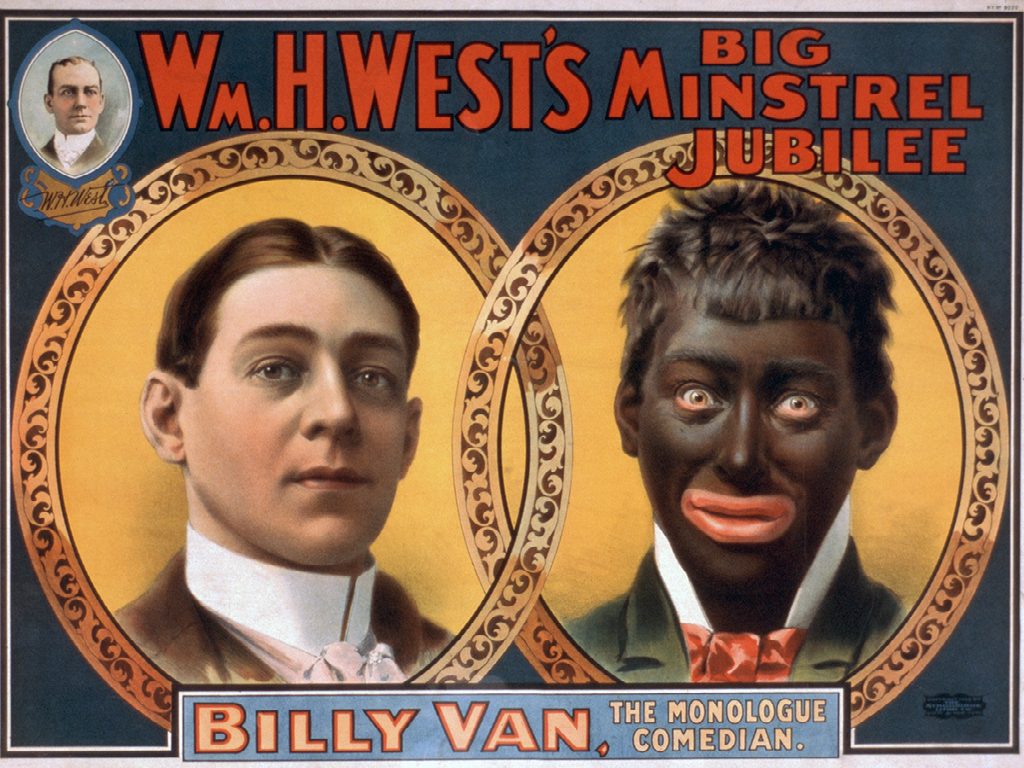

The Jim Crow Museum website is an extremely helpful resource that describes the Jim Crow Era, especially the social/cultural aspect of the time period, in great detail.
Works Cited
"Primary Documents in American HistoryGilded Age and Progression Era, 1878-1920." Plessy v. Ferguson: Primary Documents in American History (Virtual Programs & Services, Library of Congress). The Library of Congress, n.d. Web. 07 Feb. 2017.
"White Only: Jim Crow in America - Separate Is Not Equal." White Only: Jim Crow in America - Separate Is Not Equal. Smithsonian National Museum of American History, n.d. Web. 07 Feb. 2017.
"Jim Crow Laws - Separate Is Not Equal." Jim Crow Laws - Separate Is Not Equal. Smithsonian National Museum of American History, n.d. Web. 07 Feb. 2017.
"Jim Crow Era." Jim Crow Museum: Jim Crow Era. Ferris State University, 2014. Web. 08 Feb. 2017.
Davis, Damani. "Exodus to Kansas." National Archives and Records Administration. National Archives and Records Administration, 15 Aug. 2016. Web. 08 Feb. 2017.
Phillips, Kenneth E. "Tenant Farmers Hoeing a Cotton Field." Encyclopedia of Alabama. Alabama Humanities Foundation, 24 Apr. 2015. Web. 09 Feb. 2017.
Pilgrim, David, Dr. " The Mammy Caricature." Jim Crow Museum: The Mammy Caricature. Ferris State University, 2012. Web. 09 Feb. 2017.
Pilgrim, David, Dr. " The Picaninny Caricature." JCM: The Picaninny Caricature. Ferris State University, 2012. Web. 10 Feb. 2017.
Pilgrim, David, Dr. " Who Was Jim Crow." Jim Crow Museum: Origins of Jim Crow. Ferris State University, 2012. Web. 09 Feb. 2017.