Agricultural Revolution
An AP Euro Chapter 18 Project by Erica Dunn
Open Field Method
Common lands were open and lands were not divided by fences. Land was farmed as a community.
Exhaustion of soil was a problem. Nitogen-rich clovers were planted on 1/3 to 1/2 of the land to replenish the soil.
Importance: First step to Agriculture revolution, this method started basic farming.
Solved: Need for food
Impact: Increases yield of food

Crop Rotation
Pioneered by Charles Twonshend
Rotation: turnips, peas, beans, clovers, potatoes
Importance: This Idea is important becuase it Increased food production and made it possible to feed livestock through the Winter. This meant they did not have to mass slaughter their cattle before the Winter.
Solved: Low crop yields and the need to preserve mass amounts of meat with salt.
Impact: Increased nietrients in soil and resulted in more/ better crops.

Agricultural Revolution
The period in Europe from the mid-seventeenth through the mid-nineteenth centuries during which great agricultural progress was made and the follow, or idling, of a field to replenish nurients, was gradually eliminated
Importance: This peroid started a time of better overall health and success
Solved: Failed harvests that caused famime, malnutrition, and made people more seseptable to disease
Impact: This time period resluted in more methodical and sophictocated farming

Accomplishments of the Dutch
Dutch built earth walls called "dikes" to drain swamps and marshes. They needed to find a solution because of their big population. Employment and food was needed to accommodate the people.
Importance: Made Dutch Leaders in the Agricultural Revolution. Also it progressed European agriculture by giving another option to gain more land.
Solved: Drainage and the need for land to farm
Impact: The Dutch Dikes resulted in food and employment for people.

Enclosure
The movement to fence in fields in oreder to farm more efficently, at the expence of poor pesents who relyed on common fieldsfor farming and pasture
Landowners sought to increase profits by closing off fields for raising sheep
Increased number of large and medium-sized farms
Wealthy land owners wanted to experiment and find new methods of agriculture
Importance: This event led to modern day farming and established land ownership
Solved: The shortage of land to raise sheep
Impact: This event resulted in important experimentation and new ways to farm

Proletarianization
The transformation of large numbers of small peasent farmers into landless rural wage earners
Importance: This event changed the life of many peasents and created a different lifestyle for lots of people
Solved: The need for more common workers and less small farms
Impact: Since Parliament closed off common lands, many peaents had to rely on trading and working for money instaed of growing and selling food

Jethro Tull
Inventor of the Seed Drill
Importance: This invention allowed farmers to sow crops in a straight line, rather than scattering seeds by hand
Solved: Slow and inaccurate seed spreading
Impact: This invention resulted in better farming with more crop yield

Charles "Turnip" Townshend
Pioneer of Crop Rotation
Importance: Townshend used ideas from other countries and brought it to Europe.
Solved: Exhaustion of soil
Impact: This idea resulted in higher crop yields

Robert Blackwell
Pioneered selective beeding of livestock
Important: It deveoped larger and healthier animals
Solved: The need of more meat, wool, leather, soap, and candle tallow
Impact: This idea resulted in more manure for fertilization

Industrious Revolution
The shift that occured as families in northwestern Europe focused on earning wages instead of producing goods for household consumption
Importance: This event increased the ability to produce comsumer goods
Solved: The need for consumer goods
Impact: The Industirous revolution reduced economic self-sufficiency
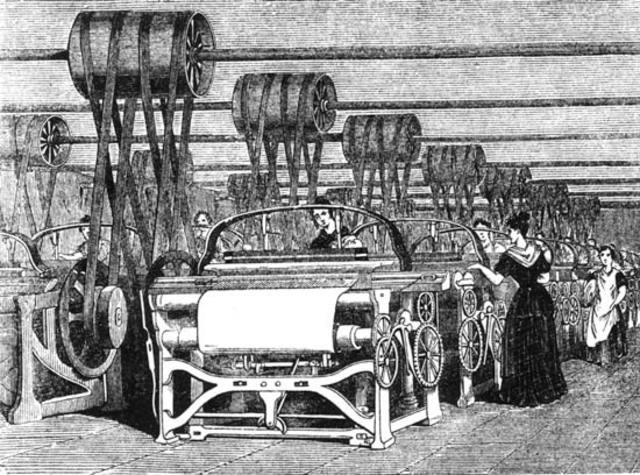
Barriers to Population Growth in the 1600's
Important: Because of the mass population growth in the 1500's, poeple were left with less overall food and high food prices
Solved: The need to find a way to cope with poverty in the future.
Impact: Because of these barriers, Europeans were forced to find new ways to live and methods for times like this
Population Growth in the 1700's
Important: This population growth happened because babies were born healthier. There were less deaths because people had better access to food and general health improved.
Solved: Malnutrition and population decline
Impact: Population growth inthe 1700's led to imporvment in sewage and in health care.

Putting-Out System and the Cottage Industry
Putting-Out System: The eighteenth century system of rural industury in which a merchant loaned raw materials to cottage workers, who processed them and returned the finished products to the merchant
Cottage Industry: A stage of industrial development in which rural workers used hand tools to manufacture goods on a large scale for sale in a market.
Important:Merchants coulds avoid higher wages, and Peasents could suplement their agruculturial incomes
Solved: This system gave everybody a job. Merchants aquired finished products and peasents got oney for making hte products.
Impact: When there was a higher demand, this system proved to be inefficient. This eventually led to the factory system
Urban Guild System
The Organization of artisanal production into trade-based associations, or giulds, each of which recieved a monopoly over its trade and the right to train apprentices and hire workers
Important: This created a system where is was every person working for a wage rather than a family
Solved: This system made a way for individuals to earn money as well as artisans
Impact: This sytem led to modern day buisness ideas.

Economic Liberalism
A belief in free trade an dcompetition based on Adam Smith's argument that the in visible hand of free competition would benifit all indeviduals, rich and poor
Important: This idea critisized many accepted ideals including guilds. It also voices d what government should look like and provide for people
Solved: This system gave another view on society and government
Impact: This idea led to Capitalism

What Inventions and tools have revolutionized agriculture in the Western world in the last 50 years?

The sowing machine has revolutionized the western agricultural world by making it easy to sow crops into the ground in a staight, even line. Also the combine is a tool that harvests crops in an efficent way.

Describe American and Western European agricultural production today.
Western European and American agricultural is very similiar. Both regions produce similiar goods, however, they produce them in different proportions. For example, the U.S. main good produce by farmers is Grains at 18%, while Europe's main good is Fruits and Vegeables at 18%.

Describe Agriculture in less developed nation in Africa, Asia, and Latin America
Compared to Europe and America, Agriculture in Africa, Asia, and Latin America is small-scale and underdeveloped. In Africa, there are many independent farms for small communities or villages. Large scale machines, like combines, are irrelevant because the farms don't have anough land to use that machine on. In Asia the difference in farming is very evident. Unlike the U.S. and Europe, Asia's lands are flooded; these lands are used to grow crops like rice. Finally, Latin America is closest to American and European farming. Latin America's farming is smaller scale, but would be more likely to make good use of large scaale tools.

Why are there food shortages in parts of the world and how can we correct this problem?
Food shortages in the world are caused by the lack of agricultural education and lack of proper resources to adequately grow necessary crops. One way to end this problem is to share our resources. As a nation and as mankind, we should find a way to evenly distribute resources to others. Another solution to end world hunger is education of agriculture. Many farmers in rural countries aren't aware of how to getthe best result from a seasons crop yield.
How could the issue of climate change create problems for farmers?
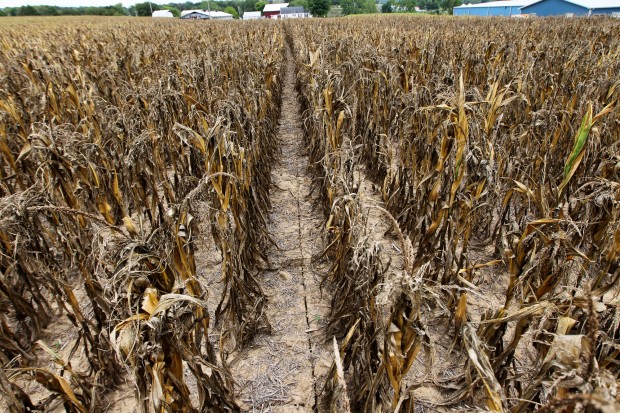
Climate change could be an inssue for farmers because of the specific needs that each crop needs. For crops to grow, they need the appropriate weather. They need warm, sunny weather that has a good amount of rain to keep general health. Climate change is changing theamount of water given to crops and the conditions the plants have to live in. The plants either don't have enough water and too much heat, or they have entirely too much water and drown. These changes effect the crop yield and inturn are capable of famines.
Works Cited
McKay / Hill/ Buckler / Crowston / Wiesner-Hanks / Perry. History of Western Society. Bedford 2011.: n.p., n.d. Print.
History Sage Notes: 18th Century Economy and Society
PowerPoint Posted on Google Classroom:Proto-Industrialization
Normile, Mary Anne., and Susan E. Leetmaa. U.S.-EU Food and Agriculture Comparisons Changing Trends Highlight Similarities and Differences between U.S. and EU Food and Ag Sectors. Washington, DC: U.S. Dept. of Agriculture, Economic Research Service, 2004. Web.