
Semi-arid deserts, also known as steppe climates, are intermediate climates between humid areas and dry deserts. Small shrubs and grasses are the most common plants in this climate.

Geographic Location
Semi-arid deserts are found on every continent except Antarctica, in areas from the tropics to temperate zones. They can be separated into two groups: hot semi-arid climates and cold semi-arid climates.

Hot Semi-Arid Climate
Hot semi-arid climates are typically found in the tropics. They have hot summers and mild to warm winters, usually without snow. The temperature in this climate stays hot or warm year round.
Cold Semi-Arid Climate
Cold semi-arid climates are usually found in temperate zones. They have hot summers but cold winters, sometimes with snow. Unlike hot semi-arid climates, they have major temperature swings from day to night, becoming very warm in the day and cold at night.

Food Web
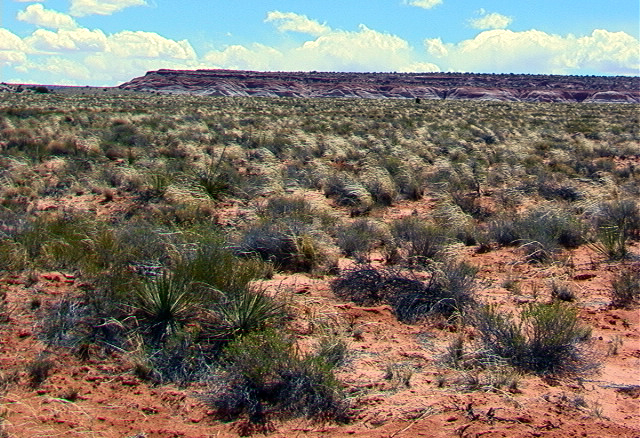


The food web begins with small shrubs and grasses as producers. These plants have adapted to hold as much water as possible due to the hot temperatures.
Next the primary consumers eat these plants. Primary consumers in a semi-arid desert include ants and other insects, lizards, and rodents such as this kangaroo rat. Many of these animals are nocturnal so they have shelter from the intense heat.
Next, the primary consumers are eaten by predators such as lizards, snakes and predatory insects.
Finally, these predators are eaten by apex predators, such as this hawk.
Human Impact
Humans impact semi-arid deserts in a number of harmful ways. Through a process called desertification, human activities such as grazing animals can turn semi-arid climates into arid deserts. Global warming can dry up watering holes for the animals in this biome. Wildfires, which are frequently started by humans, can destroy shrubs and grasses. Off-road vehicles can cause lots of damage to semi-arid climates if used irresponsibly.


Saving an Ecosystem
Despite all the human-related threats to the semi-arid desert biome, there are many ways humans can help mitigate these threats. For example, people can protect the area by only using off-road vehicles on designated trails. Other ways to help are working to prevent global warming, and preventing the start and spread of wildfires. Helping prevent the destruction of this biome is important for everyone, so they can improve the world for future generations.